
Broken Spring: Why Your Garage Door Won’t Open
You hit the button on your wall or remote, expecting the familiar hum of the opener lifting the heavy door. Instead, you hear a loud bang or perhaps the motor struggling against an immovable weight. This is the classic sign of a failure in the counterbalance system, specifically a snapped torsion or extension spring. Dealing with this issue immediately is crucial for the safety of your home and family, and the team at Parkland Garage Door Repair Services can help diagnose the specific problem quickly. While it might seem like a simple mechanical glitch, the forces involved make it a serious situation.
Understanding How Garage Door Springs Work
To understand why a broken spring causes such a headache, you first need to understand the heavy lifting they do. Most people assume the electric opener does all the work. In reality, the opener is just a regulator. The springs provide the actual muscle.
A typical residential garage door weighs between 150 and 250 pounds. Without the assistance of springs, that dead weight would be nearly impossible for an average person or a standard motor to lift repeatedly. The springs store potential energy. When the door is closed, the springs are wound tight (torsion) or stretched out (extension), holding massive amounts of tension. As the door opens, that energy releases, effectively making the 200-pound door feel like it weighs only 10 pounds.
Because they cycle through this high-tension process thousands of times, metal fatigue is inevitable. Every time you open and close the door, you use up one “cycle” of the spring’s life. Standard builder-grade springs are rated for about 10,000 cycles. Once that limit is reached, the metal weakens until it eventually snaps, often with a gunshot-like report that can be heard from inside the house.
The Dangers of Attempting DIY Repairs
We live in an era of online tutorials where fixing household items feels accessible to everyone. However, replacing a garage door spring is not the same as unclogging a drain or painting a wall. This is one of the most dangerous household repairs you can attempt without proper training and tools.
The tension stored in these metal coils is immense. If you attempt to unwind a torsion spring without the correct winding bars and a solid understanding of the mechanics, the tool can slip. If the spring uncoils rapidly, it can inflict severe injuries to hands, arms, and faces. The cables connected to the springs are also under extreme tension and can cause lacerations or worse if they snap or detach unexpectedly.
Furthermore, installing the wrong size spring is a common DIY mistake. If the new spring is too strong, the door will fly up uncontrollably and could damage the opener or jump off the tracks. If it is too weak, the opener will struggle, overheat, and fail prematurely. Professional technicians measure the wire size, inside diameter, and length to ensure the counterbalance is perfectly matched to the door’s weight.
Recognizing the Signs Before Failure
While some springs break without warning, your door will often give you clues that the system is wearing out. Paying attention to these subtle changes can save you from being trapped in your garage on a Monday morning.
The most obvious sign is an imbalance. If you pull the emergency release cord (the red handle) to disconnect the opener, you should be able to lift the door manually to waist height. It should stay there, hovering in place. If the door feels incredibly heavy or slams crashing to the floor, your springs are failing or have already broken.
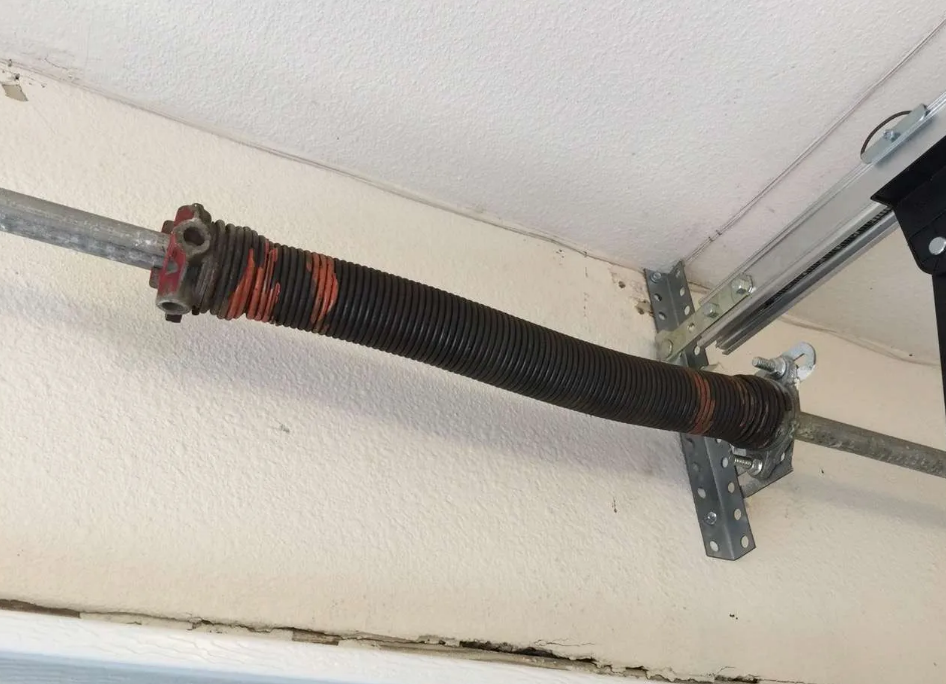
Listen for excessive squeaking or groaning noises that lubrication doesn’t fix. This often indicates the coils are rubbing against each other or the shaft due to deformation. You might also notice a gap in the coils of a torsion spring. A healthy spring looks like a continuous, tight coil. If you see a two-inch separation in the middle of the metal coil above your door, the spring has snapped. Visual inspections and balance tests done every few months are excellent preventative habits that keep your system running smoothly and safely.
Contact Parkland FL Garage Door Repair Services Today
Call us Here
Hours of Operation
Sun 7:00AM – 11:00PM
Mon 7:00AM – 11:00PM
Tue 7:00AM – 11:00PM
Wed 7:00AM – 11:00PM
Thur 7:00AM – 11:00PM
Fri 7:00AM – 11:00PM
Sat 7:00AM – 11:00PM
RECENT POST
Emergency Garage Door Repair: What to Do When Your Door Fails
Emergency Garage Door Repair: What to Do When Your Door Fails A stuck garage door
Garage Door Opener Repair Guide | Parkland Garage Door
Garage Door Opener Repair Guide | Parkland Garage Door Your garage door opener serves as
Garage Door Opener Replacement
Garage Door Opener Replacement The smooth, quiet hum of your garage door opener is a
Broken Spring: Why Your Garage Door Won’t Open
Broken Spring: Why Your Garage Door Won’t Open You hit the button on your wall
How to Spot the Need for Emergency Garage Door Spring Replacement
How to Spot the Need for Emergency Garage Door Spring Replacement Your garage door serves
Overhead Garage Door Repair for Misaligned Tracks
Overhead Garage Door Repair for Misaligned Tracks A noisy, grinding garage door is more than
Garage Door Section Replacement for Insulated Doors
Garage Door Section Replacement for Insulated Doors An insulated garage door is a fantastic investment
How to Choose the Best Material for Your Garage Door Installation
How to Choose the Best Material for Your Garage Door Installation Your garage door takes